Indian black tea: a robust brew to start your day right
Amber in the cup, bold and malty: Indian black tea is a natural partner for breakfast. Its history, how it is made and our guidelines for brewing it plain, with milk or as chai.
Contents
A mahogany-coloured cup, a bold and sometimes malty taste that stands up well to a splash of milk: for many people, Indian black tea is the morning cup par excellence. Behind this everyday drink lies a fairly recent history and a very specific craft.
What is Indian black tea?
Like all teas, it comes from the tea plant, Camellia sinensis. In the 19th century, a large-leaved form of the tea plant growing wild was identified in the Assam region of north-east India. Under British administration, vast plantations were then established, turning India into one of the world's leading tea producers. Today the names of its great tea regions, such as Assam, Darjeeling and the Nilgiris, are known far beyond its borders.
Black tea differs from green tea in the way it is made: the fresh leaves are first withered, then rolled to release their juices, left to oxidise fully in the air, and finally dried. This full oxidation gives them their dark colour and a rounder, more robust flavour.
As the product sheet specifies, ours is a black tea from India. Black tea naturally contains caffeine, which is why it is so popular first thing in the morning or in the early afternoon.
How to brew it
Our druggist recommends it as an infusion. Black tea can take hotter water than green tea:
- Allow about one teaspoon of leaves per cup, a little more if you plan to add milk.
- Pour freshly boiled water over the leaves, ideally in a teapot warmed with hot water beforehand.
- Steep for 3 to 5 minutes: 3 for a lighter cup, 5 for a strong brew. Beyond that, bitterness takes over.
- Remove the leaves at the end of steeping so the flavour stops developing.
Plain, with milk or as chai
Indian black tea can be enjoyed plain, with a slice of lemon or, the English way, with a dash of milk. In India it is also made into chai: the tea simmers for a few minutes with milk, sugar and spices such as cardamom, ginger or cinnamon. A warm, fragrant drink, perfect for winter afternoons.
Precautions
Mind the caffeine. If you are sensitive to it, avoid black tea in the evening. During pregnancy or breastfeeding, and for children, it is advisable to limit drinks containing caffeine; ask us for advice if needed, and also if you are taking medication. Keep the tea dry, in a tightly closed tin, away from light.
Our products
- Indian black tea – for an amber, full-bodied cup, plain or with milk.
The morning cup
Whether it goes with your toast or becomes a spiced chai, Indian black tea is a simple, generous companion. To find the steeping time or accessory that suits you, come and talk to the team at Droguerie Perusset in Yverdon-les-Bains.
Products mentioned in this article
The information in this article comes from the documentation of these products. Check it before use.
Related Articles
Chinese green tea: how to choose it and brew it properly
Water that is too hot turns green tea bitter. Origins, processing and simple st…
Chinese black tea: the smooth and mellow “red tea” of China
In China, black tea is known as “red tea”. History, flavour profile and brewing…
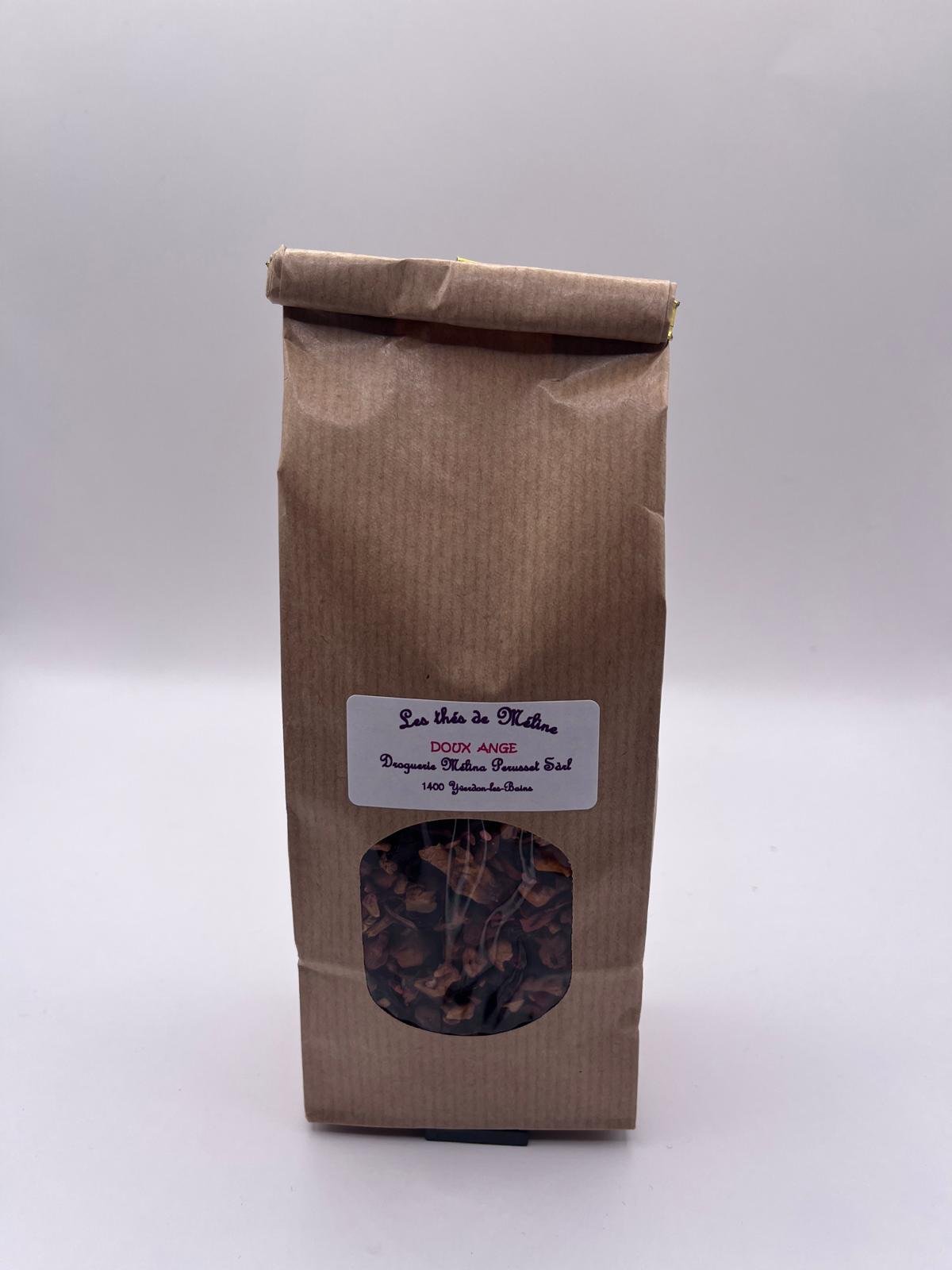
Doux anges: a fruit infusion of raspberry and cranberry
Intense raspberry, golden raisins and cranberries: the Doux anges infusion bala…
Comments (0)
Leave a Comment
No comments yet. Be the first to share your thoughts!